Shashlik, meatballs, goulash, borscht. We looked at what children are fed at school and how much it costs
School nutrition plays a key role in shaping healthy habits in children and adolescents, providing them with the necessary nutrients for full growth and development.
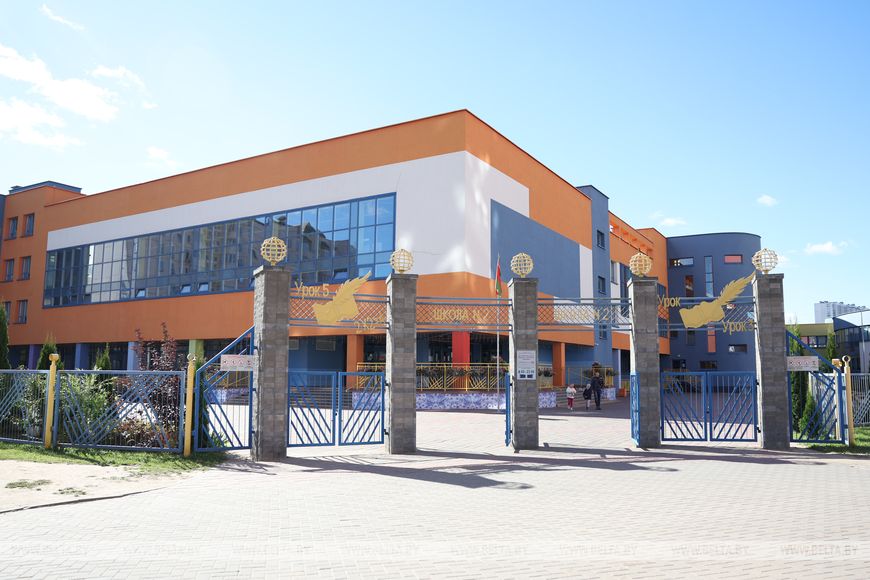
Proper nutrition at school not only contributes to improving the physical condition of students but also affects their concentration, academic performance, and overall well-being. In today's world, where children are faced with various temptations of fast food and unhealthy food, the organization of quality school nutrition becomes particularly relevant. This is not just a matter of providing children with food, but an important step towards creating a healthy future for the younger generation. The School Nutrition Combine is responsible for organizing nutrition in Minsk schools. BELTA correspondents found out what and how children are fed, using School No. 2 in Minsk as an example.
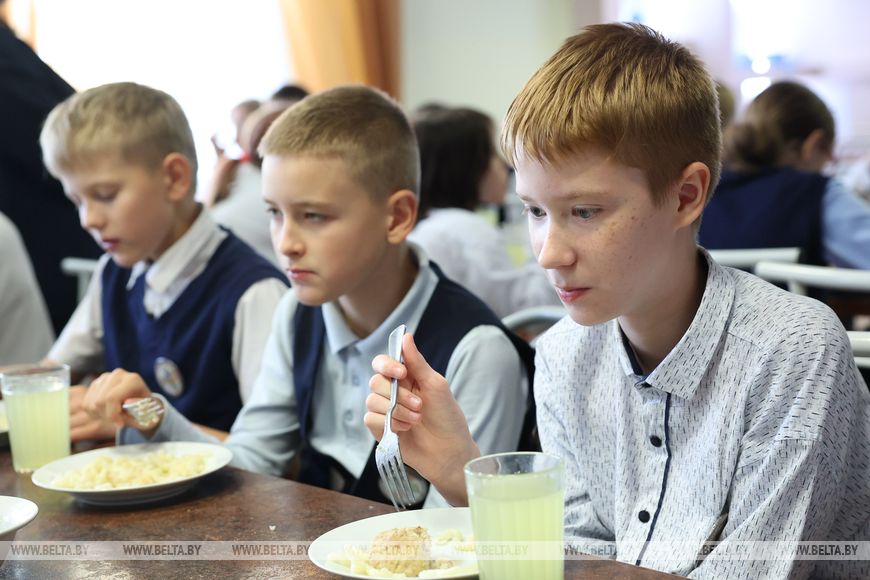
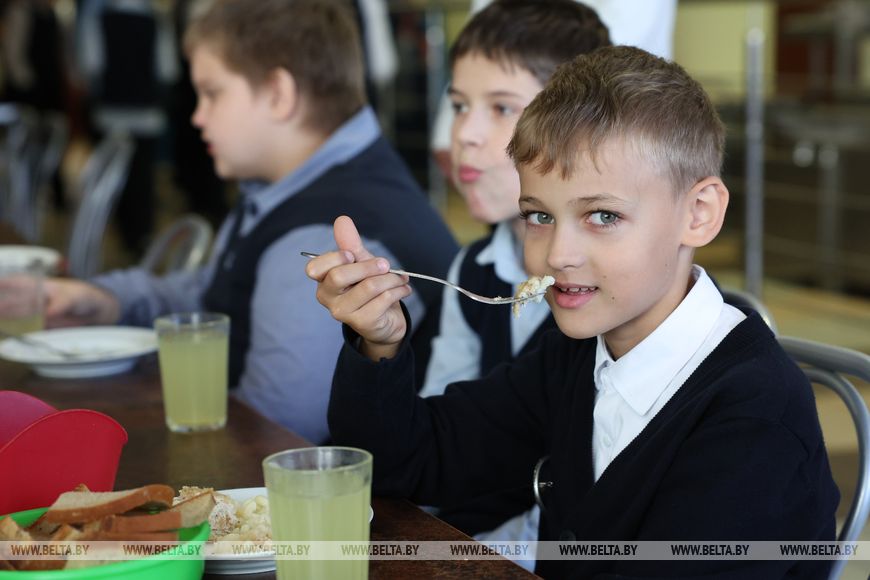
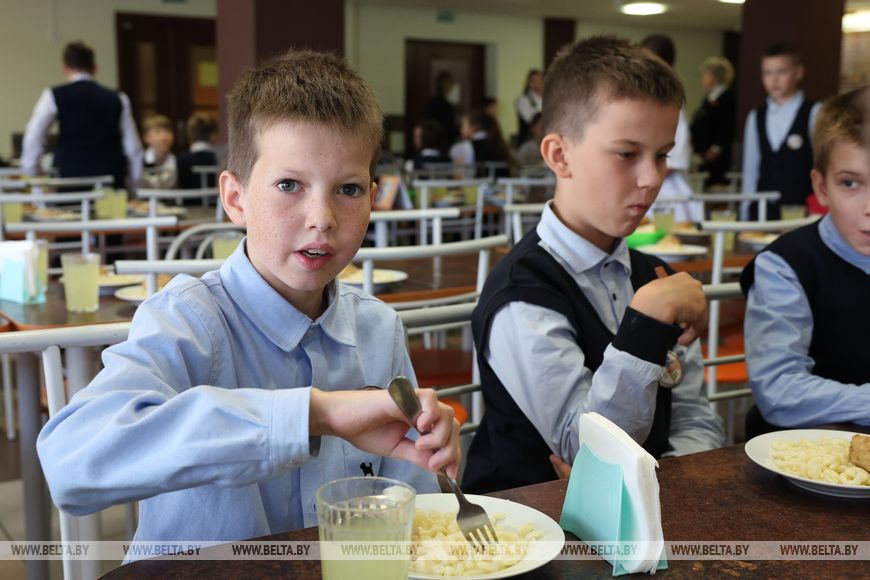
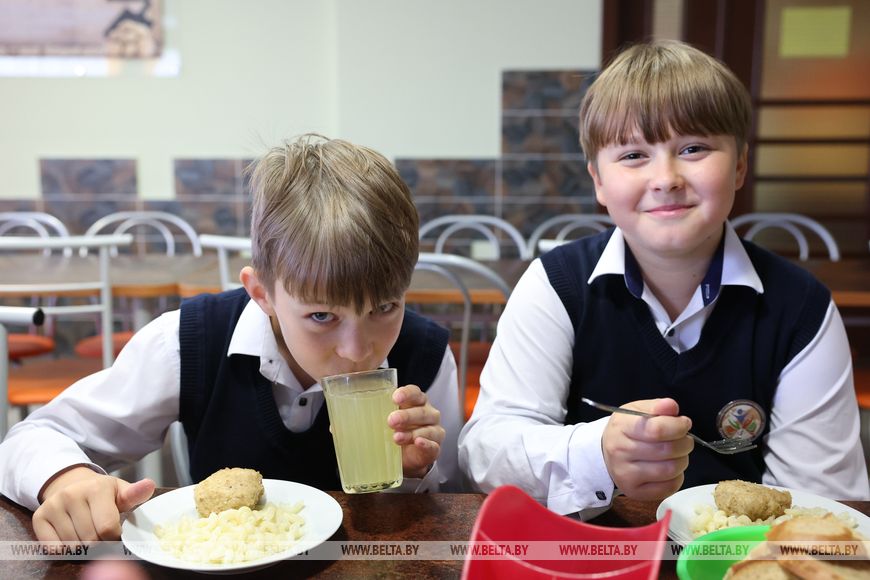
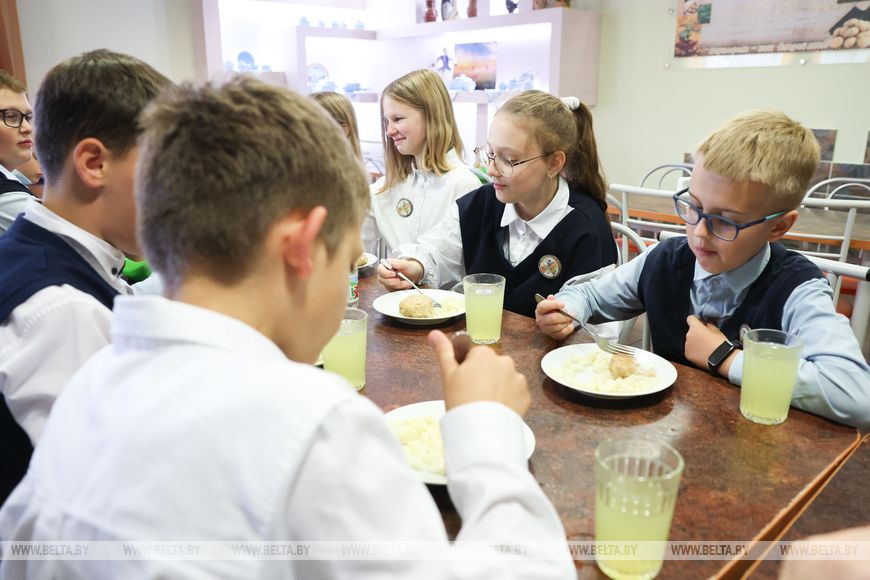
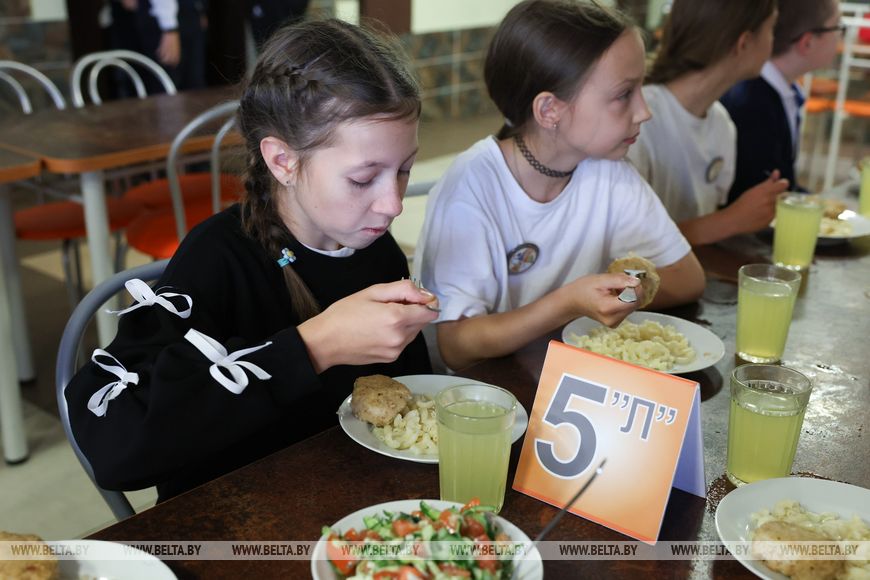
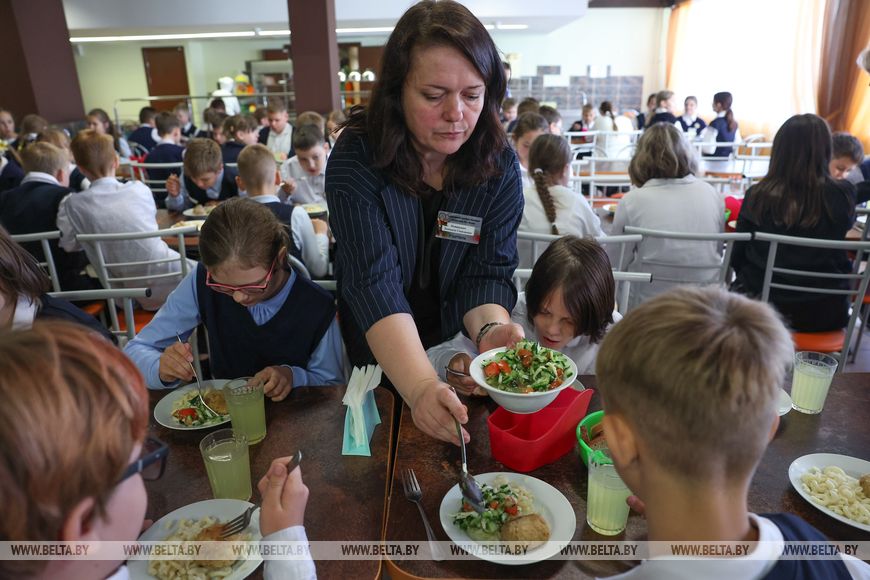
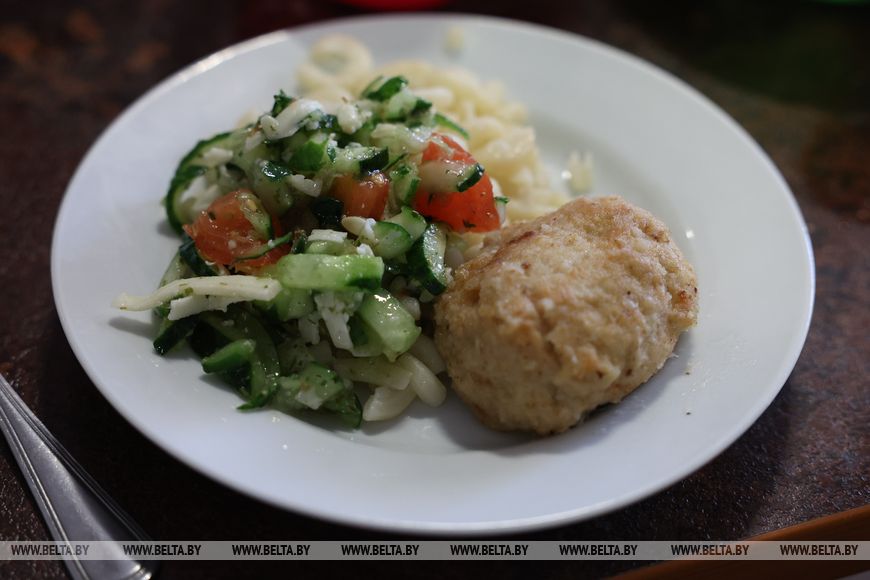
Fifth-grader Nikita Tomashkov and his classmates look forward to school lunch every day. It usually takes place after the 3rd or 4th lesson, by which time active fifth-graders manage to get very hungry. "I like everything in our canteen. Today we have a chicken cutlet with pasta - it's very tasty, just like at home. I also like buckwheat with sausages. But my favorite, which I will never refuse, is pelmeni. Once they gave them to us with sour cream. Our whole class ate it. They should give them more often," the boy said, and his friends confirmed, not yet knowing that pelmeni would be served the next day.
Their class teacher and math teacher, Tatyana Lisovskaya, accompanies the class to the canteen every day. The teacher assured that the pelmeni at school are not only eaten completely, but there is also room for seconds. "Children mostly eat well. There are favorite dishes, there are less favorite ones, but no less healthy. Teachers make sure that students eat anyway. Somewhere we explain, somewhere we persuade. In general, we teach them to treat food, bread, with care, for this we recall history, the blockade, we talk about hunger, which in the modern world, unfortunately, is not so rare," the teacher shared.
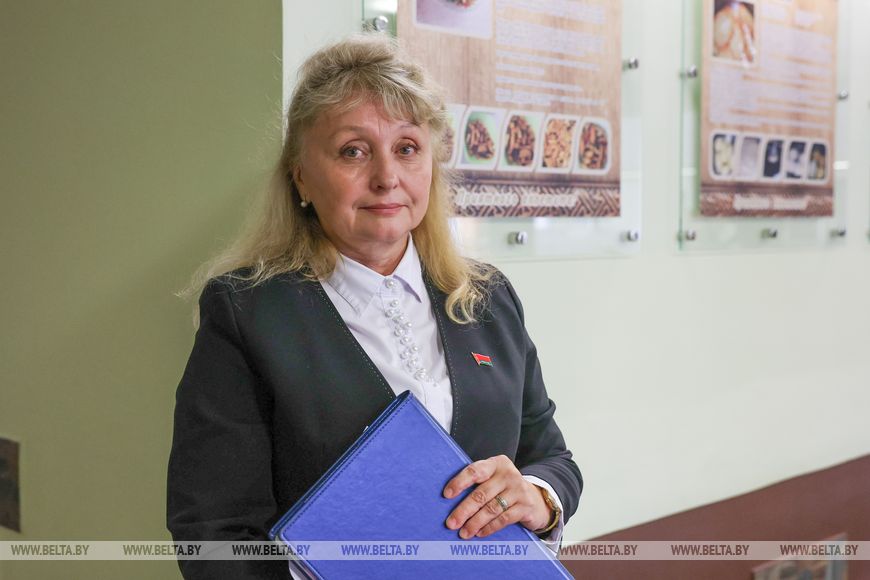 The head of children's nutrition at School No. 2 is Larisa Dubanevich, the canteen's production manager. She is the one who receives the products from which breakfast, lunch, and afternoon snacks will subsequently be prepared at the school. "We work with a two-week menu, which is developed by technologists at the Minsk School Nutrition Combine. For example, we have a chicken dish scheduled. The Vitebsk Broiler Factory supplies us with the products. They deliver fillets and thighs to us. I inspect them to ensure they haven't been thawed. If everything is fine, I stamp them, and we accept the products. Then we prepare, for example, chicken cutlets, if they are on our menu. The process with meat products is similar. Vegetables are supplied to us pre-peeled and vacuum-packed, and can be stored for 10 days. The acceptance procedure is similar: we review the accompanying documents, the quality certificate, and check for any breaches in the packaging. Dairy products are supplied by the dairy combine," informed Larisa Dubanevich.
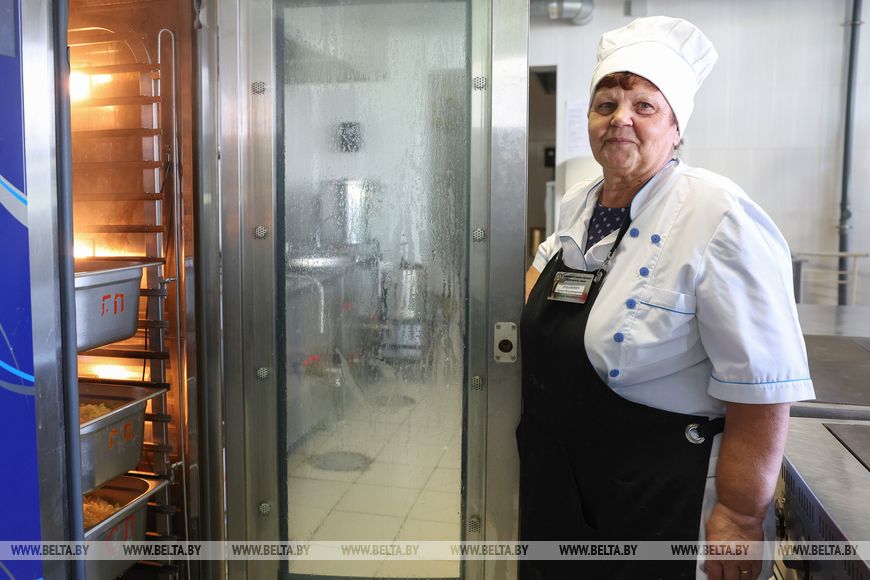 The manager emphasized that the products always arrive in good quality. "They fully meet the requirements for children's nutrition. We don't even have cases where we have to reject products. The supplier strives for quality, as everyone understands that this is for children's nutrition. Everyone has children, grandchildren, and everyone tries to ensure that the children eat well," she is confident.
 Oksana Kokareva, the principal of Minsk Secondary School No. 2, noted that the canteen and buffet are the most popular and accessible places in the school. "This is considering that the use of mobile devices is currently limited in schools. During breaks, we use all active means for leisure activities. We have created conditions for sports and interactive games. Also, one of the ways to distract from both the learning process and the absence of mobile devices is, of course, visiting the school canteen and buffet. We constantly monitor the organization of meals right up to the end of the second shift, because students in the 6th and 7th grades eat during the second shift, as well as the extended day group in primary school. Here, we have established high-quality cooperation between the School Nutrition Combine and the school," said the head of the educational institution.
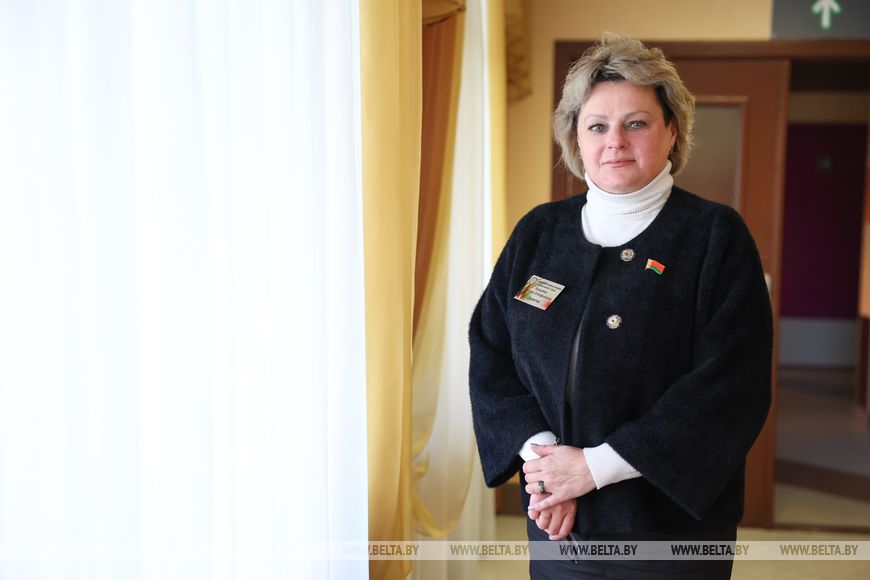
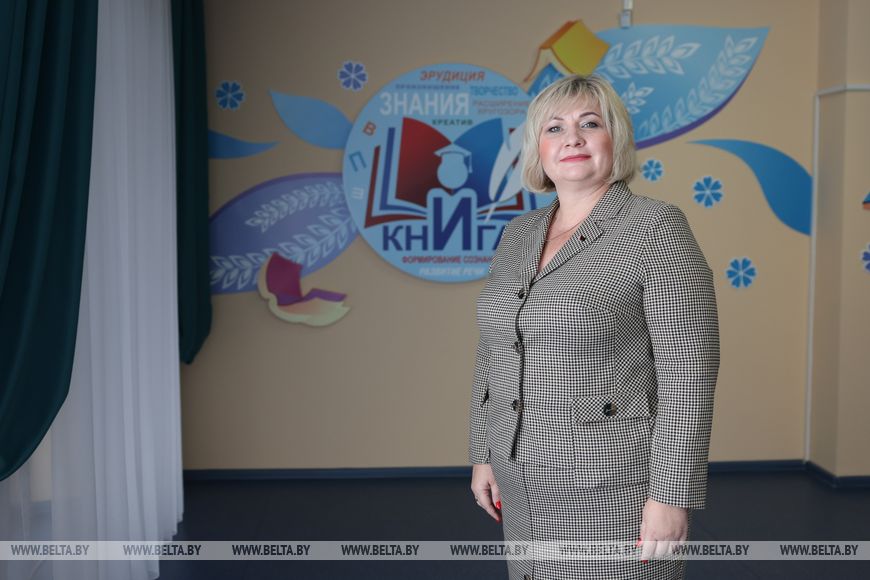
 Lyudmila Krupskaya, Director of the Minsk School Food Combine, manages an enterprise responsible for all processes related to feeding children in the capital's schools. "The School Food Combine currently comprises 330 facilities. Our network is extensive; we feed approximately 230,000 schoolchildren in the capital. Specialists of the combine develop sample two-week menus. These menus are developed seasonally (for autumn, winter, and spring periods), taking into account calorie requirements and rational
 The system is clear, but not without novelties. "This season, we have included three products that have not been used in children's nutrition before - daikon and celery. For daikon, we took a dish from an informational booklet, and celery is included in one salad - this is a development by our plant's specialists. Also, based on the results of a survey conducted in May last year, we offered children a sea kale rillet with vegetables. This is boiled chopped sea kale with added vegetables - carrots, onions, bell peppers, and tomatoes. Sea kale rillet with vegetables is very rich, primarily in iodine, vitamins, and minerals. Children really liked this product, and this year we have included it in the menu and are already seeing positive feedback. And the most important indicator for us is a child's clean plate after a school lunch," emphasized the head of the enterprise.
 Regarding the cost of school meals, the current cost of breakfast for primary school students is Br2.08, and lunch for them (attending extended day groups) is Br2.98. Lunch for students in grades 5-11 costs Br3.51. As previously reported by the Ministry of Education, from October 1, the monetary norms of expenditure on food for students of general education schools, preschools, and other educational institutions in Belarus will be increased by 5%. "The norms are developed based on a quarterly analysis of food prices. This approach ensures objectivity and transparency in the formation of food expenditures. The change will be an important step towards a sustainable, high-quality, and accessible children's nutrition system, where the primary focus remains the health of the younger generation," the department explained, noting that the last increase in food expenditure norms was introduced on September 1, 2023.
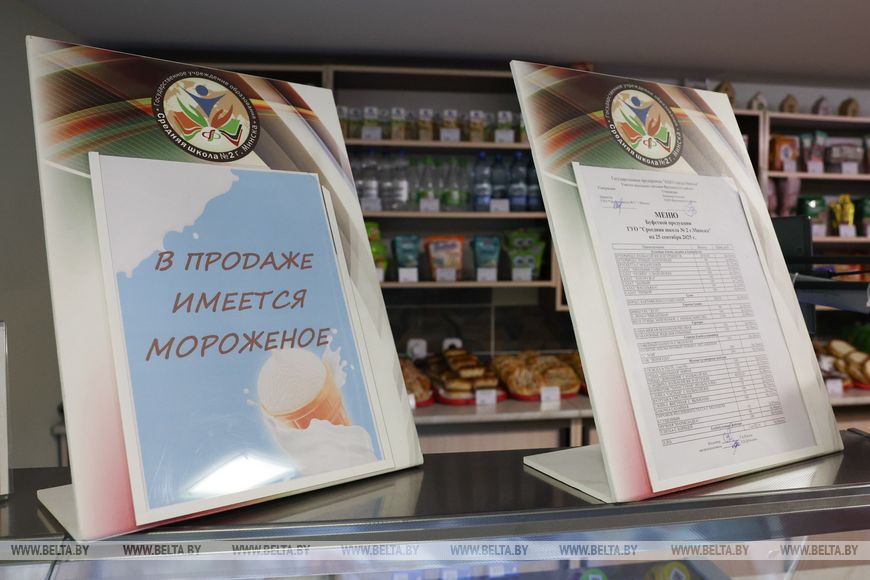
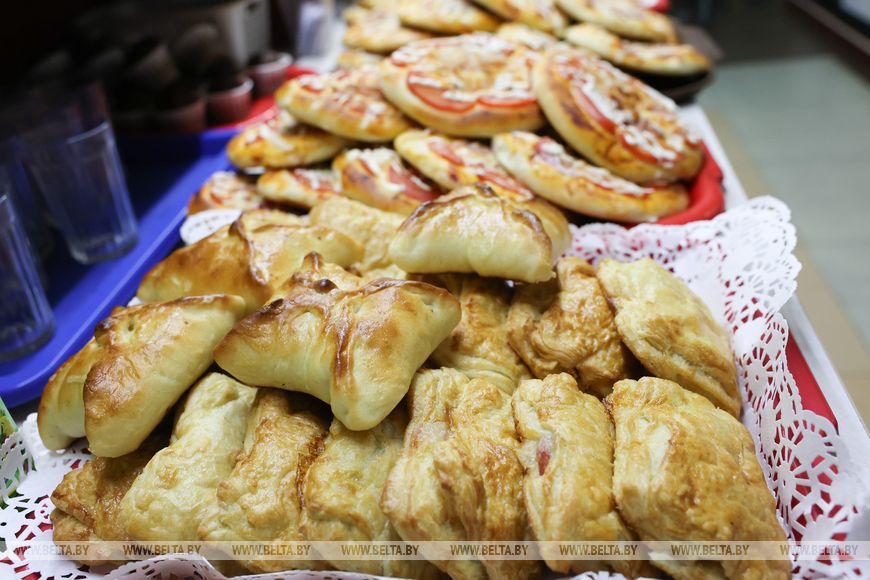
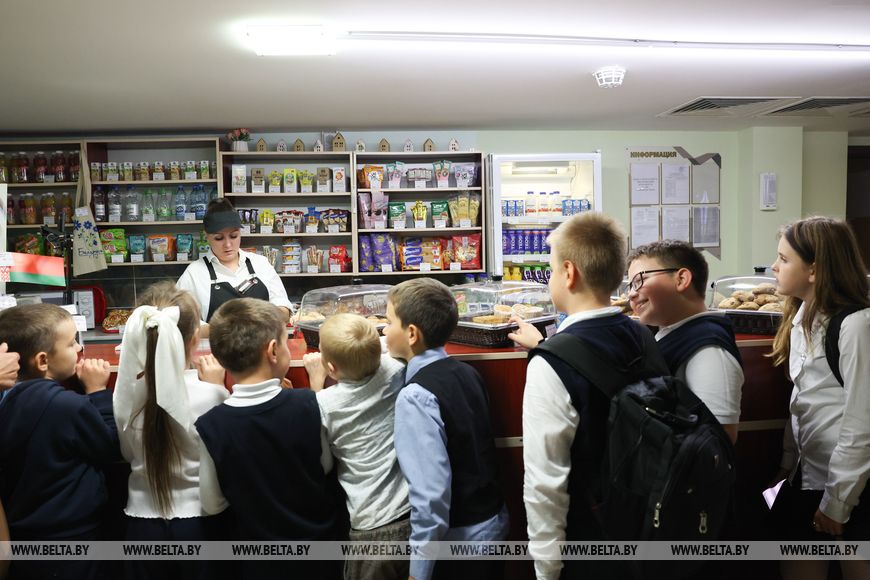
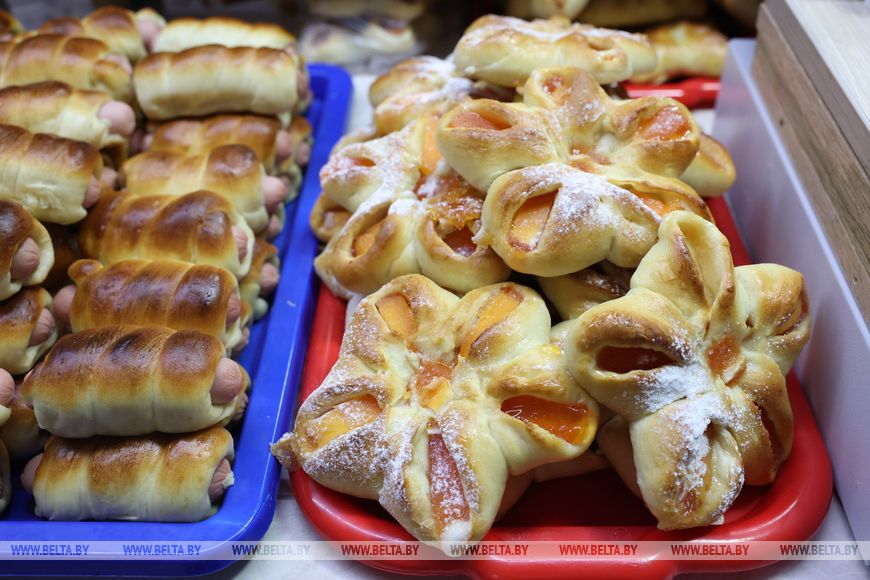
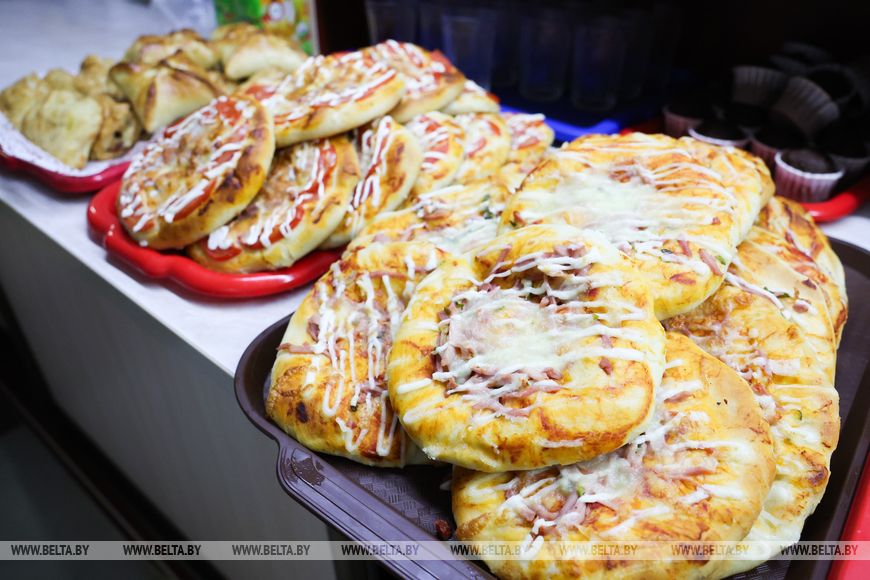
 Pricing is also regulated in school buffets. "Yes, we also provide additional meals for children in buffets," noted Lyudmila Krupskaya. "There is a limitation on the products offered: the buffet should have no more than 10 types of sweets in industrial packaging. This can include, for example, marshmallows, halva, chocolate, waffles, and so on. I want to emphasize that all products sold in buffets comply with children's dietetics. You will not find any forbidden or unacceptable additives in a school buffet. There are no sodas, no chips, only juice-containing drinks and acceptable sweets. In addition, products of our own production are widely represented. Today, for example, is a day when children can buy pizza and sausage rolls. We have restrictions on these products: they can only be consumed by schoolchildren twice a week. All other baked goods – buns, croissants – are sold daily. There is a wide assortment of salads, sandwiches, yogurts, and milkshakes. Our children love these very much."
 In fact, parents can also control everything edible at school. "If they have questions, there is the school-wide parent committee for that. Legal representatives can form a group, come to the school, and observe the food preparation process. To do this, certain conditions must be met – the school has shoe covers, disposable gowns, and gloves. Please, a group of representatives from the school-wide parent committee can observe how everything is organized, even during the food preparation stage; they can be present in the kitchen during the loading of products. They can even taste the dishes that we serve to children every day," emphasized the school principal.
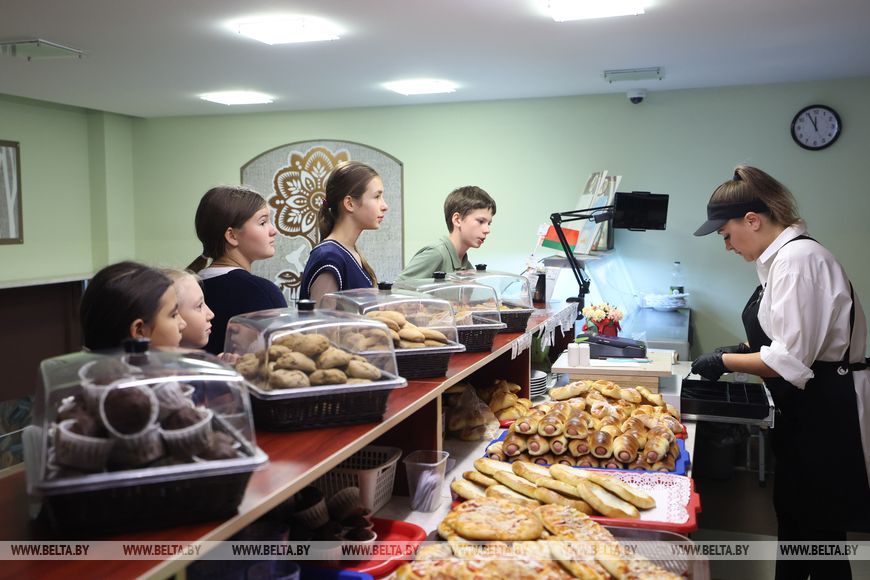
 Nadezhda Shcherbak, head of the school nutrition department of the Frunzensky district of the School Nutrition Combine, is confident that the quality of nutrition also depends on those who cook in schools. "Each educational institution has its own staffing schedule. According to it, we select personnel, striving to have a team of professionals working in each school – we select the best staff. Because quality products are only half the battle. They need to be cooked well. We all understand that one cook will prepare mashed potatoes one way, and another will prepare them differently from the same products. In my opinion, the most important thing to remember is that to cook for children, you need to love them and, of course, your profession," added Nadezhda Shcherbak.